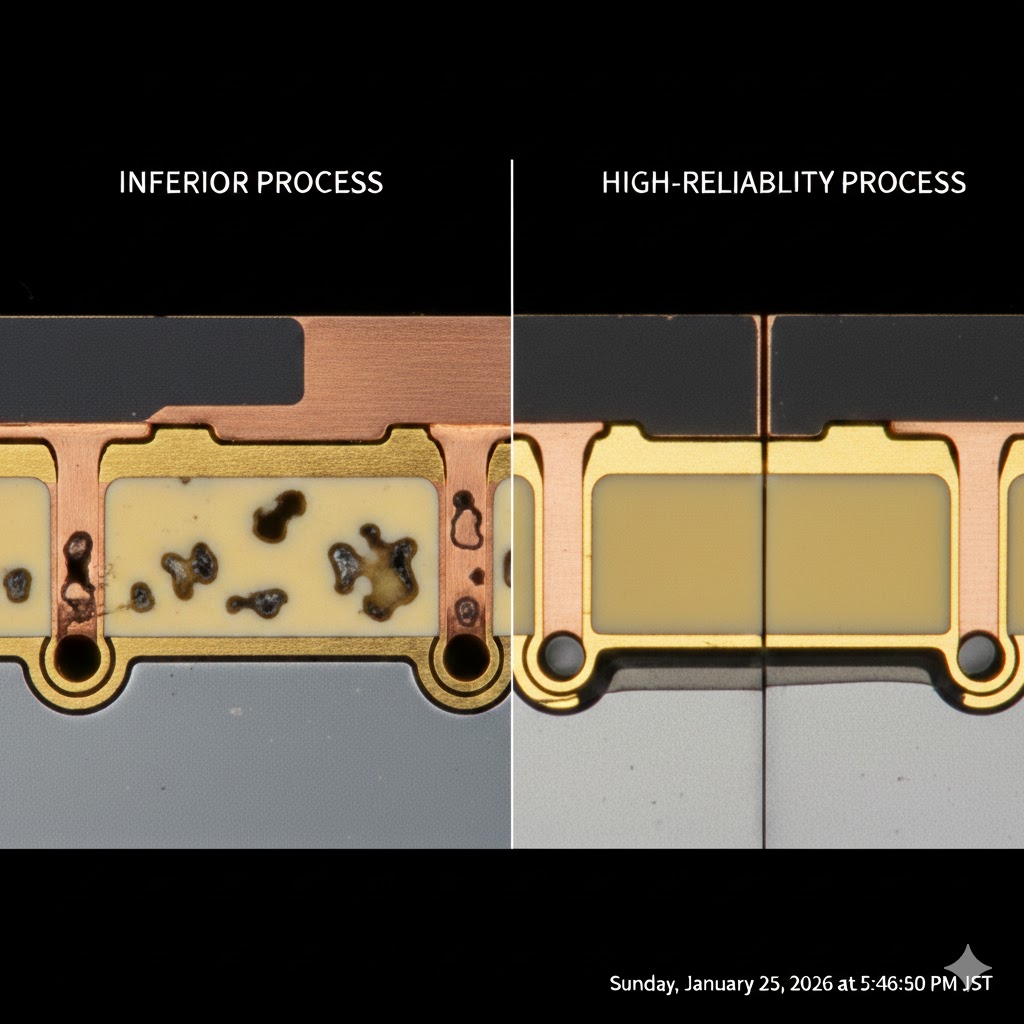
Thermal reliability shouldn't be a guessing game. At Benchuang, we engineer high-conductivity PCBs that bridge the gap between your FEA simulations and real-world durability. We don't just manufacture boards; we eliminate the thermal bottlenecks that cause field failures, ensuring your power modules run cooler, longer, and safer.
Polyimide Flexible PCBs (Flex PCBs) are the backbone of modern devices that demand adaptability. Benchuang leverages advanced Polyimide materials to deliver circuits that endure extreme temperatures, vibrations, and tight spaces, while supporting high-density interconnects.
1-20 Layers Multi-Layer Flex Capabilities
Ultra-Thin Profiles (Down to 0.05mm)
19 Years of Precision Expertise (Est. 2007)
Rapid Turnaround: Prototype to Production in 7-15 Days
💎 CORE ADVANTAGES OF BENCHUANG POLYIMIDE FLEX PCBs
[1] EXTREME TEMPERATURE RESILIENCE Polyimide base withstands -200°C to +300°C, making it ideal for aerospace engines, automotive under-hood modules, and medical sterilization processes.
[2] SUPERIOR FLEXIBILITY & RELIABILITY Designed for millions of flex cycles without cracking. Our Roll-to-Roll processing ensures consistent performance in wearables, foldable displays, and robotic arms.
[3] HIGH-DENSITY INTEGRATION Incorporate HDI microvias and fine traces (down to 0.05mm) on flexible substrates. Perfect for blending rigid-flex hybrids in space-constrained AI and IoT modules.
[4] CHEMICAL & ENVIRONMENTAL RESISTANCE Resistant to oils, acids, radiation, and moisture. Our Flex PCBs thrive in harsh industries like oil & gas exploration and satellite communications.
📱 APPLICATIONS
WEARABLES & CONSUMER ELECTRONICS: Smartwatches, foldable phones, and VR headsets.